

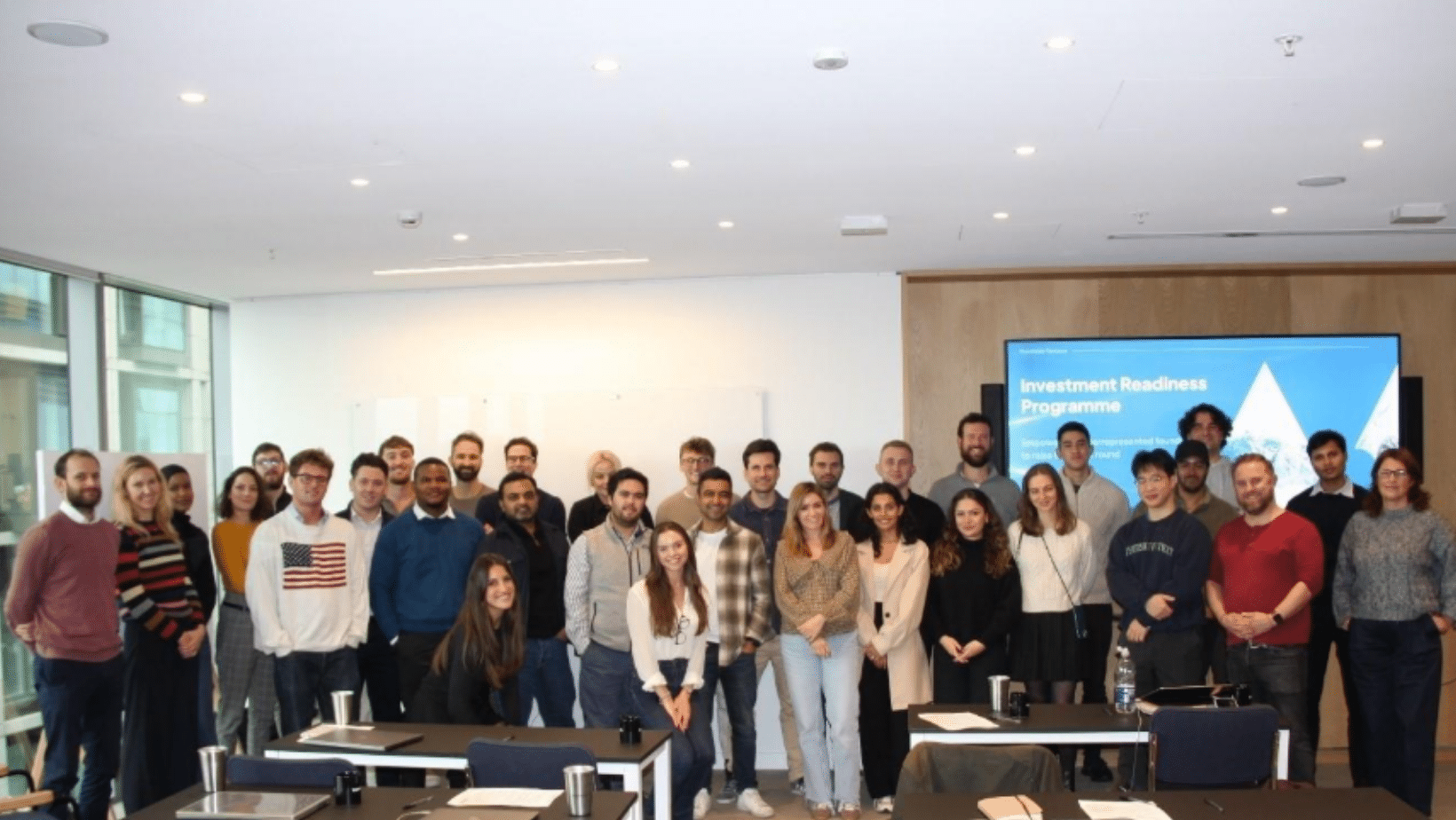
Guest article written by Funding London.
Raising your first or even second funding round is a full-time job on top of your other 101 responsibilities. That’s the best and worst part about being a founder: wearing all the hats.
Perhaps you’re a technical founder who’s developed an exceptional AI model but prefers to stay out of the spotlight. Or maybe you’re the marketing guru but numbers aren’t your strong suit.
It often feels like you need to know everything (and be great at all of it).
The good news: fundraising largely comes down to preparation, clarity and momentum.
Funding London has supported over 1,000 startups, invested over £150 million, and contributed more than £1 billion in private leverage. We know a thing or two about fundraising.
A fundraising round starts long before the first investor meeting. To help you get investment ready, we’ve put together a six-step plan with typical timelines, because the patterns of successful fundraising repeat themselves.
1. Nail your pitch (2–6 weeks)
a. Tell your story in less than 60 seconds
Who are you (name, role)? What’s the name of your company (say it clearly – remember, others haven’t heard it before)? What problem are you solving? Who are your customers, and how big is the opportunity?
The problem is your anchor. Use the “Five Whys” to de-layer until you find the root cause. It may surprise you.
b. Build a snappy pitch deck and leave them curious
Three minutes: that’s the average time investors spend reviewing a deck. Your only goal at this stage: get a meeting. Keep it to 15 slides, each with one clear message:
- Problem,
- Solution,
- Traction,
- Team,
- Competitor analysis,
- Differentiation and defensibility,
- Monetisation/pricing structure,
- Market,
- Financials, and
- Your ask.
Set aside time for questions at the end.
2. Understand investment sources
There’s far more to fundraising than VCs. Consider angels, SEIS/EIS funds, syndicates, crowdfunding, family offices, etc.
Investor alignment matters. Your long-term vision should match their expectations. Alignment will reduce friction in your investor relationship and offer more opportunities for visibility and support.
Ask yourself: “If someone offered me £30 million for my company today and I could walk away with £20 million, would I take it?” If yes, VCs may not be the ones for you.” Why is that? VCs are looking for unicorns (£1bn+ valuation).
Here’s a general rule of thumb:
- VCs look for rapid, outsized growth with the potential to become a fund returner (think: Triple-Triple, Double-Double-Double model).
- SEIS/EIS funds seek more modest returns over shorter time horizons, while delivering tax benefits for Limited Partners (LPs).
Always, always, always(!) research an investor’s thesis, portfolio, and fund vintage (the year the fund was launched). These shape their appetite for risk and timing.
3. Build an investor FAQ sheet and keep it fresh (2 weeks)
What is an investor FAQ sheet (also known as a factsheet)? It’s a running list of expected investor questions with pre-written answers. Update as you go.
Prepared answers help you respond quickly and remain relevant. Even more importantly, it quietly suggests you are speaking with other investors. It signals you’re leading a competitive process, creating FOMO.
If you’re early and pre-revenue, demonstrate traction creatively (110% you will be asked about traction):
- Letters of intent (LoI),
- Survey data,
- Waiting lists, and
- Social following and website traffic.
Each signals demand.
4. Create an ambitious, yet realistic financial model (2–6 weeks)
Early-stage financial models rely heavily on assumptions. This is expected. They should be ambitious but grounded. If you lack historical revenue, justify assumptions with proxy data:
- Industry benchmarks,
- Competitor performance, and
- Behavioural trends.
Leverage competitor data to benchmark and market size. There are two approaches:
- Top-down (TAM, SAM, SOM), and
- Bottom-up (SOM, SAM, TAM).
VCs generally prefer bottom-up because it demonstrates real measured demand. If the market isn’t big enough, most investors won’t even blink.
Avoid defining your market in a way that makes your SOM unrealistic. Finally, know your numbers like the back of your hand and stress-test your model.
VCs increasingly fund 18-24 months of runway (compared with the previous 12-months) because capital efficiency matters more than ever. Creativity in extending your runway is a competitive advantage.
5. Practise your pitch (1 week)
Run your pitch past mentors, peers, friends… anyone who will listen. Confidence comes through repetition.
Remember: investors are hearing your company name for the first time. Say it clearly. Slow down. Be intentional.
Something fun we like to do is to take the pitch to an actual elevator. Can you make it before the doors open?
6. Build relationships early (2–6 months)
Oftentimes, your best opportunities sit in your secondary network (people you know loosely, but who can open valuable doors). Think beyond investor relationships. Consider:
- Partners,
- Advisors, and
- Fellow founders who have gone through a fundraising round.
Building strong networks is a great way to build your social credibility for future investment and customer acquisition.
Send concise, quarterly updates – reliable, not constant. That consistency builds trust and keeps you front-of-mind, so when you’re ready to raise, they already know who you are.
The conclusion
Following these six steps of preparation will likely improve your chances of success when you’re going out to market to raise. You can never be prepared enough, and this list is a great place to start.
We’ve condensed these six steps in a printable checklist, so you tick items off as you go along. It’s about taking one step at a time, and your first step starts here.
Access the checklist here.
Image provided by Funding London